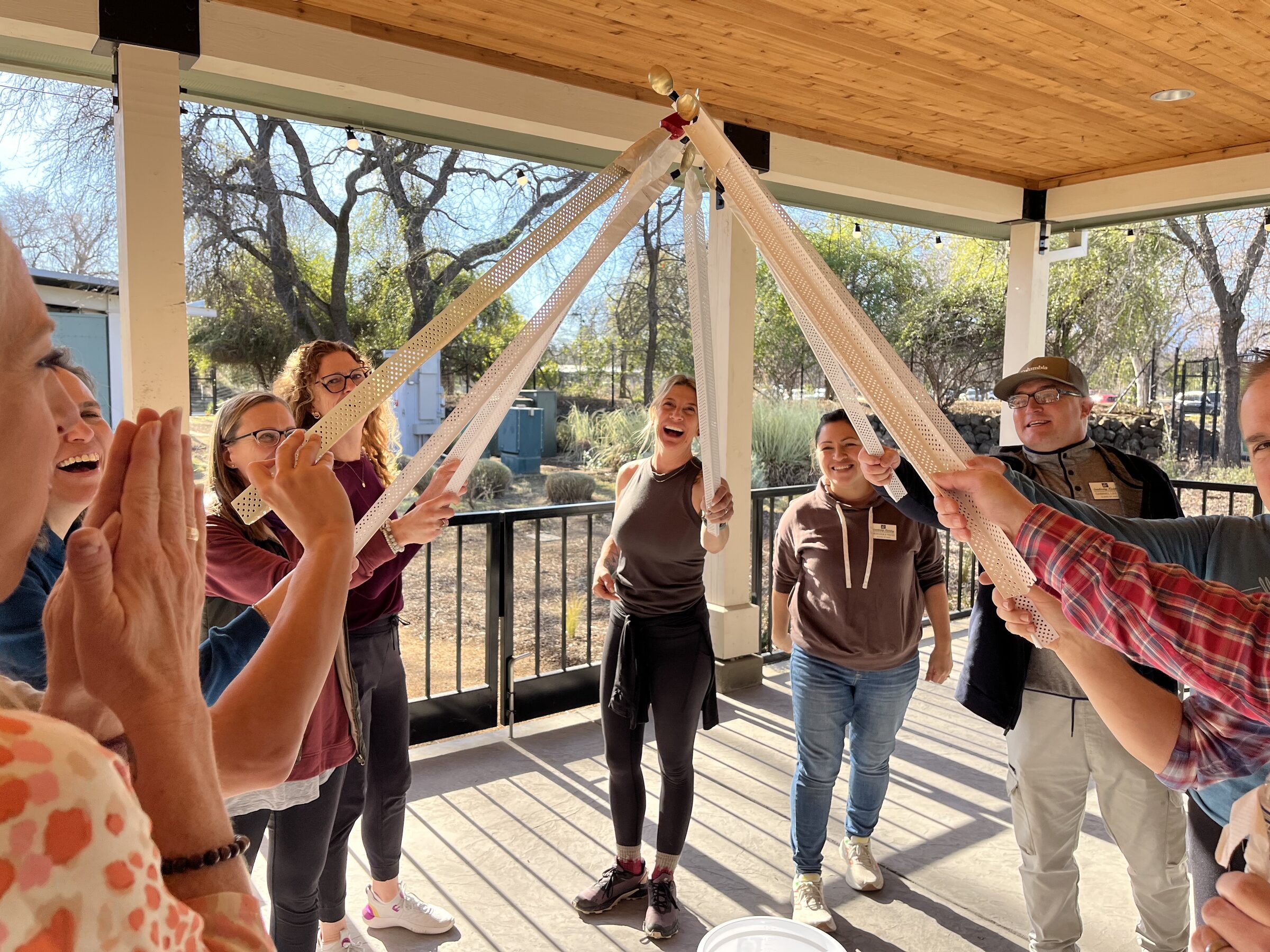
A team outdoors on a porch raising a tripod of poles together, laughing
Teams · Team Retreats

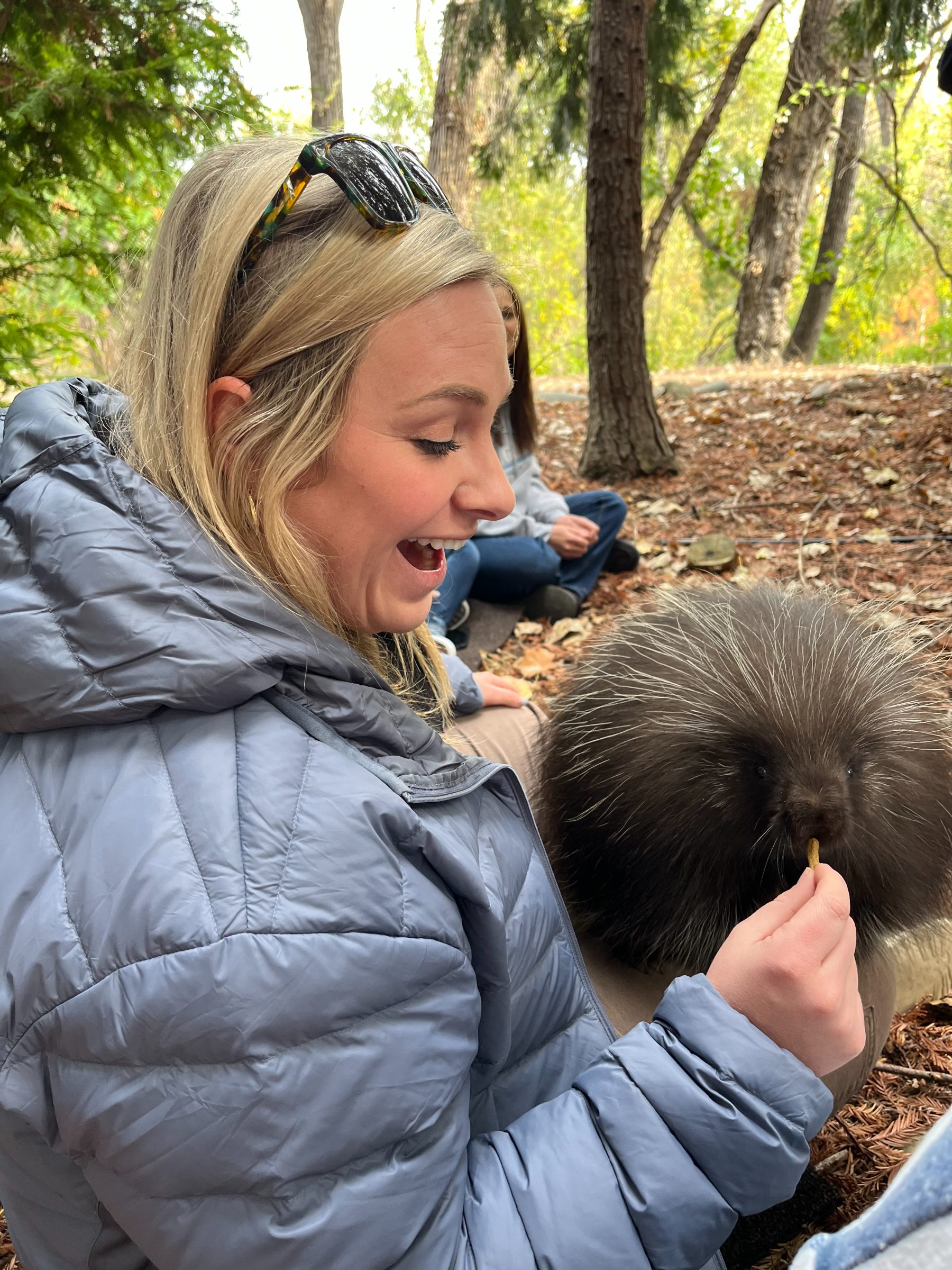
There is a real, live porcupine in this story.

It walked across the laps of an actual leadership team in the middle of a conversation about what happens when we approach the unfamiliar with curiosity and play instead of fear.

Some things can’t be learned sitting down.

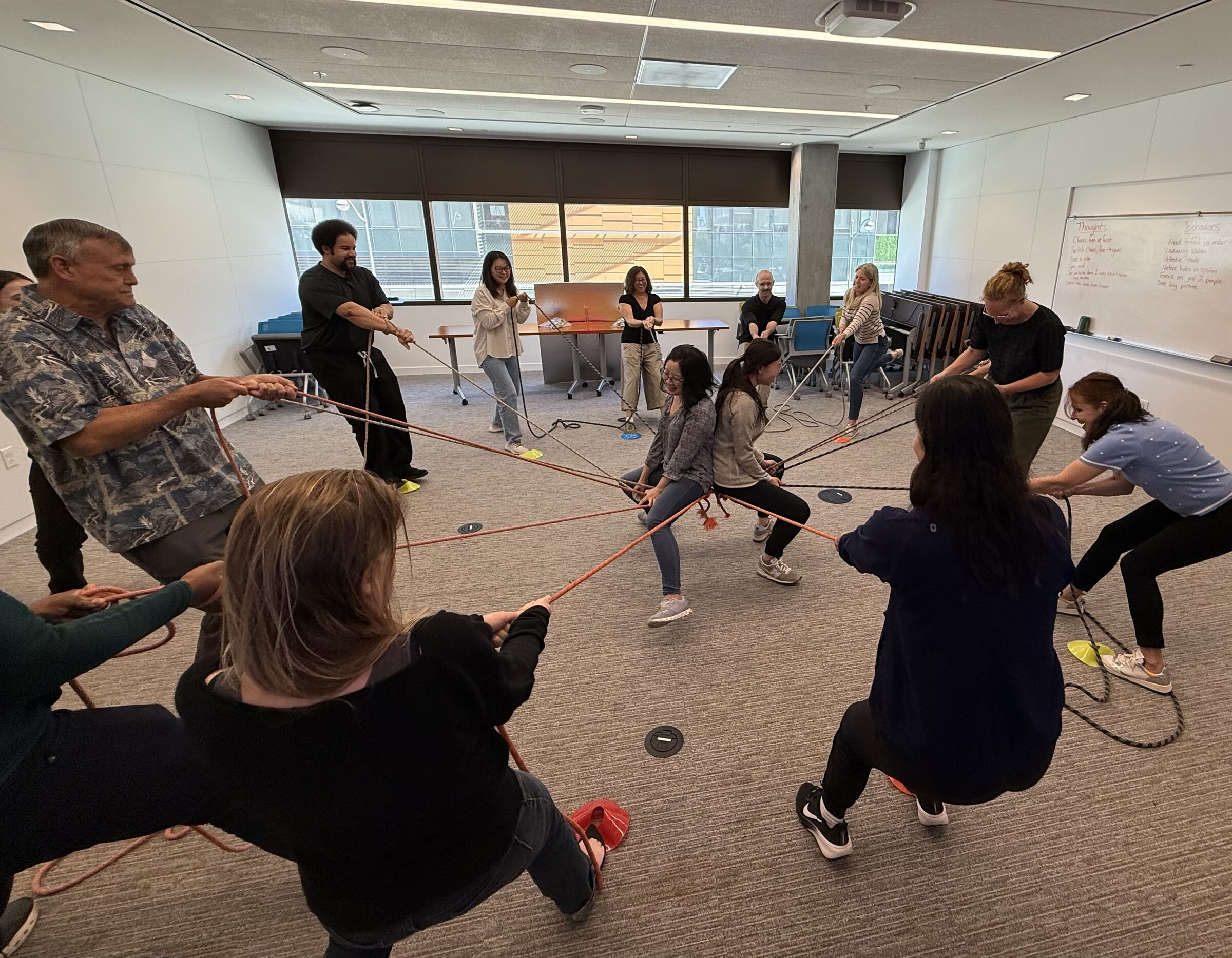
Team members leaning their weight into a rope-web trust exercise together

You can explain trust to a team for an hour. Or you can put them on a portable ropes element where one person’s weight is truly in another person’s hands, and let them find out what they actually do.

Hands-on, minds-on experiences change people. They bring out the race, gender, power, and economic dynamics that nobody wants to talk about but everybody feels under the surface. Interactive games, heartfelt emotion, and physical movement recruit more of the brain than words alone. They work because what gets encoded in an embodied way is more durable, more retrievable, and much harder to nod along with and forget than anything that could be put on a slide. Bonus: it's fun!

Irene spent seven years running high and low ropes courses before she ever had a doctorate, and she has been facilitating games and experiences for groups ever since — from trust falls to custom D&D adventures. She studied the brain's emotion and motivation centers and knows exactly how far to push a group and where the line is. And she knows that the point was never the porcupine. The point is the twenty minutes afterward, when a team that just did something hard together is finally willing to talk about the hard thing they’ve been avoiding at work.

Not your average offsite.
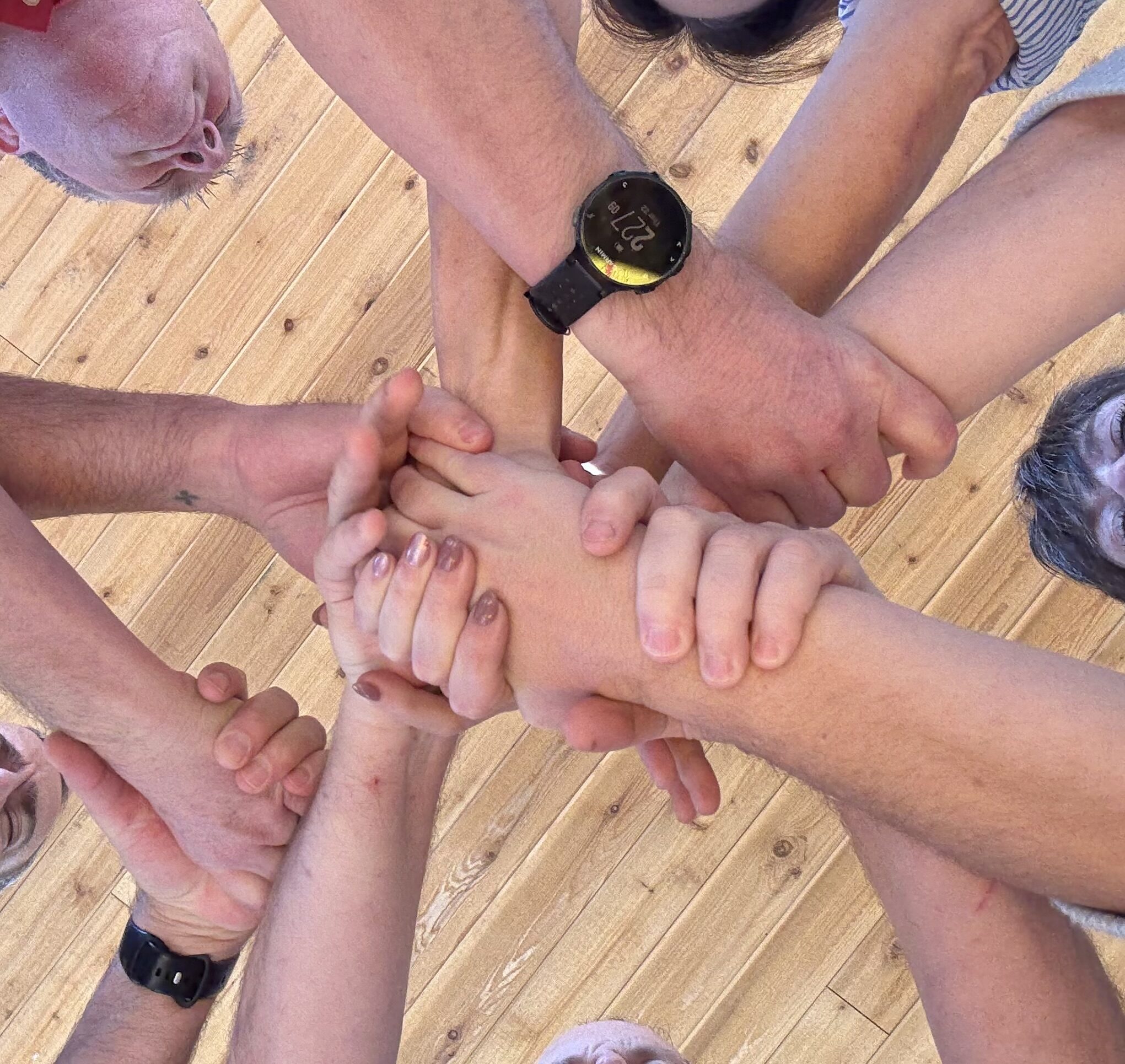
Many hands clasped together at the centre of a human-knot exercise
Healthy Rumbles: Learning to Disagree Well

Lick-Wilmerding High School · Full day

Communication · Conflict · Trust

Most teams avoid conflict until it boils over in a staff meeting. This retreat shows why healthy conflict is essential and how to engage in it well. Grounded in the neuroscience of threat, leaders learn to notice when they’ve gone reactive and to speak in ways no one can argue with. Games reveal the behaviors that build cooperation or invite betrayal. Each leader brings an object that shaped them, opening a conversation about how race, economics, and gender show up at work. One-on-one conversations then deepen trust, and the team leaves with shared norms for healthy heat.
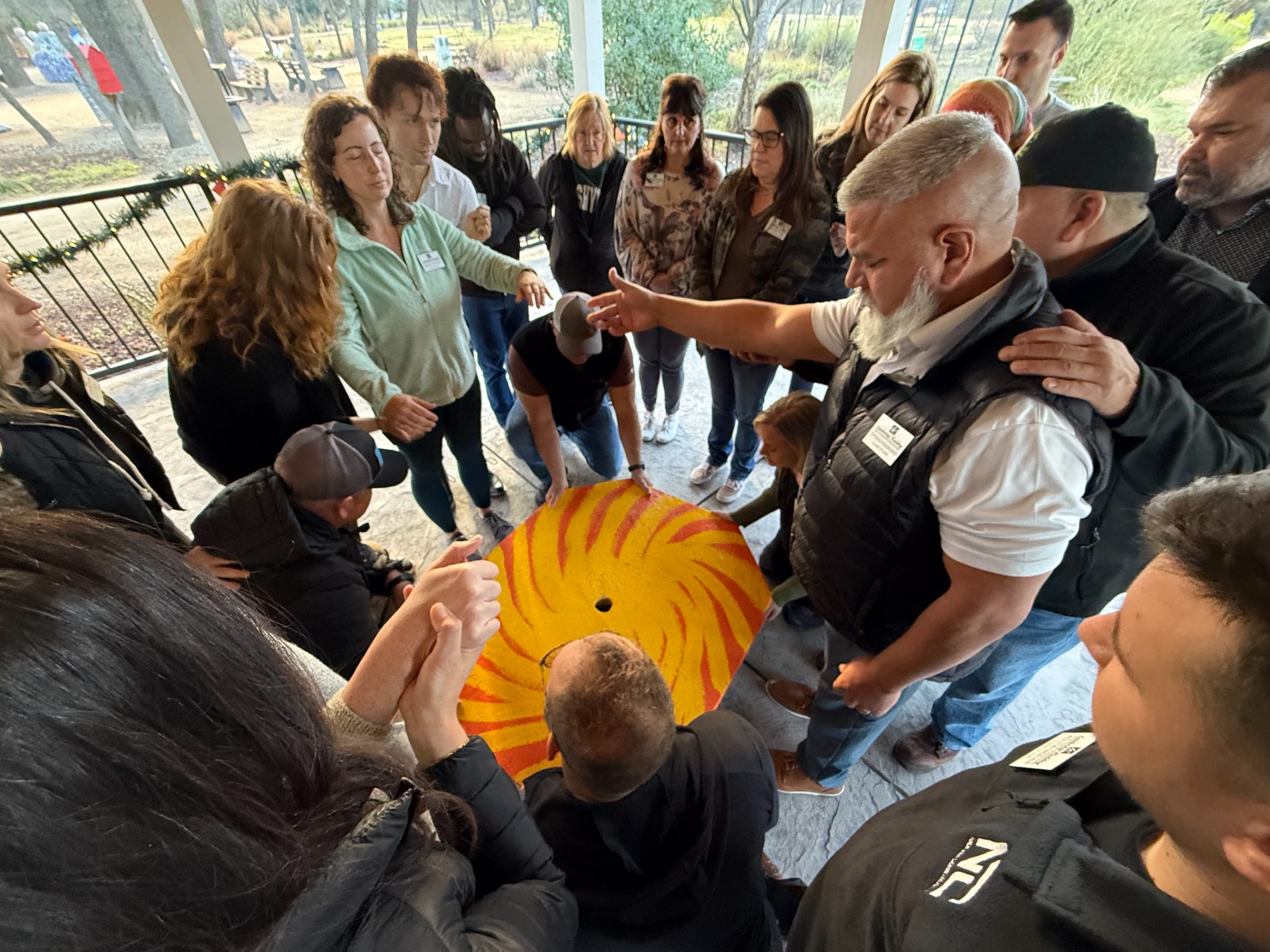
Retreat participants gathered around a giant yellow spinner during an outdoor team game
Building Bridges Across Political, Personal, and Professional Divides

Leadership Redding mid-year retreat, in partnership with Project Discovery · Full day

Teamwork · Communication · Leadership Identity

It’s hard to get people with different perspectives working together, especially now. But that’s exactly what communities need: coalitions of diverse leaders taking action on what matters. Participants explore the root causes of polarization, practice finding common ground, and build the skills to work as a team across real difference.

(Wear casual clothes. There’s outdoor play involved.)

Leaders laughing mid-game around a table
Leading From the Inside Out: A Parts-Work Adventure

Kindred Hearts · Six private coaching sessions + Half day

Play · Leadership Identity · Trust

Every leader carries a cast of internal parts: the perfectionist, the critic, the fixer. And most team conflict is one person’s inner part tangling with someone else’s. In private sessions beforehand, each leader gets to know a part of themselves that gets in the way and turns it into a character. Then the team plays Crash Pandas, a custom Dungeons & Dragons–style adventure where a gaze of raccoons steals a car to win an illegal midnight street race. Afterward, we debrief the chaos into real leadership lessons.

(No gaming experience necessary. Raccoon mischief encouraged.)

Half a day, a full day, or several.

Half day — one theme, done properly. Enough time to do the thing, debrief it honestly, and leave with something specific.

Full day — the arc has room to move. Morning gets people out of their heads, afternoon puts what they discovered to work on something real in their organization.

Multi-day — for a team facing a real inflection point: a merger, a new leader, a strategic reset, or a fracture that a single conversation isn’t going to close.

For retreats with a real experiential component, Irene doesn’t run it alone.

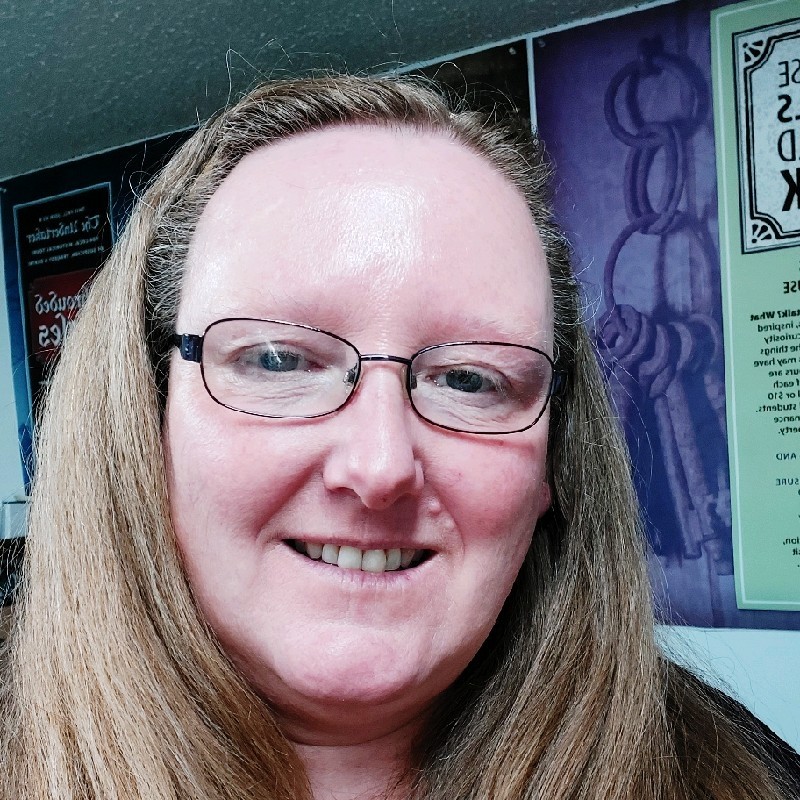
Dr. Mike Selby
Dr. Mike Selby

Co-Facilitator, Experiential Team Retreats

He’s the driving force behind Project Discovery and brings fifty years of experience facilitating groups and a PhD in leadership development. 

Delighted participant touching a porcupine's quills in an autumn wood

“Irene facilitated a wonderful visioning retreat for our organization that created a safe space for open dialogue, let us dream, and provided us with a vision for the future that we couldn’t have reached without her assistance.”

Heather Farquhar

Heather Farquhar

Nonprofit Executive Director

Begin the conversation.

Start with the vision. Together we'll work backward to uncover what kind of day it would take, and whether a retreat is the right instrument or whether something else is needed first.